
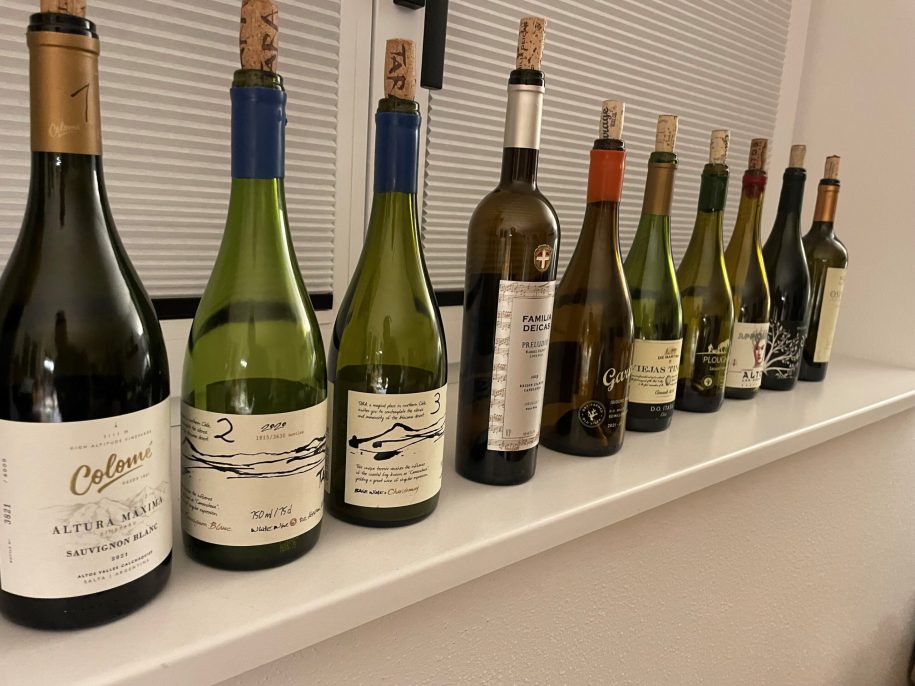
South America is known not only for its breathtaking landscape and cultural diversity, but also for its exquisite wines. The wine regions of the South American continent are a true paradise for wine lovers and offer a unique opportunity to discover the aromas and flavors of this region.
Via DWINER, each of us had created a tasting list for the submitted wines and sent it to the host. Two wines were then taken from each. Argentina, Chile, and Uruguay were represented most often. In summary, here is also a brief overview of the most important regions.
Chile
- Maipo Valley: Often called “Chile’s Bordeaux”, it is known for its high-quality Cabernet Sauvignon wines.
- Casablanca Valley: Thanks to the cool coastal climate, it is ideal for white wines such as Chardonnay and Sauvignon Blanc.
- Colchagua Valley: Known for red wines, especially Carmenere, the “lost” Bordeaux grape variety that was rediscovered in Chile.
- Aconcagua Valley: Both red and white wines are grown here, including some first-class Syrahs.
Argentina
- Mendoza: By far the best-known wine region of Argentina. Most of the Malbec for which Argentina is famous comes from here.
- Salta: Located in the northwest and especially known for its high-altitude vineyards. The aromatic white Torrontes comes from here.
- Patagonia: A cooler region in southern Argentina known for both red and white wines.
Uruguay
- Canelones: Uruguay’s most important wine region. Above all the red Tannat grape variety is grown here, considered a national pride.
Brazil
- Rio Grande do Sul: Brazil’s southernmost state and the center of its wine scene. In particular the “Vale dos Vinhedos” region is known for its sparkling wines and red wines.
Peru
- Ica Valley: Although Peru is better known for its Pisco (a type of grape brandy), wines are also grown here, especially red wines from the Quebranta grape variety.
Bolivia
- Tarija: Located in the high altitudes of the Andes, this region produces both red and white wines that are internationally recognized.
These regions offer an impressive diversity of terroirs, influenced by the Andes, the Pacific coast, and the continent’s unique climate zones. The result is an exciting range of wine styles and profiles, from traditional to innovative.


Leave a Reply